




As Ho Chi Minh City prepares to begin construction of Metro Line No. 2 in early 2026—and as major cities such as Hanoi, Da Nang, Hai Phong, Can Tho, and Phu Quoc simultaneously accelerate their urban railway planning—a once-in-a-lifetime opportunity is emerging for Vietnamese enterprises. It is not only a market worth tens of billions of dollars, but also a gateway into the global supply chain of the metro industry, a sector long dominated by foreign corporations.
Recently, Saigon Times Online (thesaigontimes) highlighted Cat Van Loi as a representative example of Vietnamese companies striving to enter this global supply chain. Experience from Metro Line No. 1 shows that although Vietnam has made progress, the localization rate remains modest, with most added value still concentrated in the hands of foreign contractors. Domestic companies often participate only in auxiliary components. However, the implementation of the country’s first metro line also proves that with serious investment, Vietnamese enterprises can fully meet international standards and even become integral links in the global supply chain.
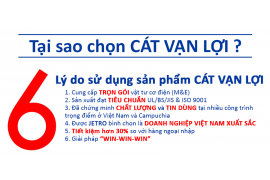
The case of Cat Van Loi Industrial Electrical Equipment Manufacturing Corporation is a clear example. To be approved as a supplier of electrical and mechanical materials for Metro Line No. 1, the company spent nearly two years completing testing, certification, and evaluation requirements under Japanese standards. This was a lengthy and costly journey, but it allowed the company to move beyond basic subcontracting and gradually build a management and production system aligned with international practices. CEO Le Mai Huu Lam shared that every specification and technical requirement of their products had to meet the stringent standards of Japanese contractors. Without serious investment in production lines, processes, and quality control, Vietnamese companies would struggle to pass even the initial testing stage. This experience provided Cat Van Loi with invaluable know-how, forming a foundation that enables deeper participation in metro supply chains across the region.
Drawing from the lessons of Metro Line No. 1, many Vietnamese enterprises are proactively preparing for the next phase as new metro lines are about to be implemented. Alongside private companies, major domestic conglomerates are also setting their sights on urban transport infrastructure, aiming to build interconnected supply systems rather than operating in isolation. Some experts believe that if Vietnam can develop cooperation models similar to Japan’s Keiretsu groups—where each company specializes in a particular role while sharing unified technical standards—the country could form a strong domestic metro ecosystem capable of competing with foreign contractors.
Still, the road ahead presents challenges that enterprises must overcome. Most materials and equipment used in metro projects require international certifications such as UL, FM, ANSI, IEC, or JIS. Vietnam currently lacks internationally accredited testing laboratories for metro-related products, forcing companies to send samples abroad for certification—an expensive, time-consuming process. Many firms lose motivation early on when confronted with the “never done – not allowed to do – no experience” cycle. Even after achieving compliance, the requirements for management and quality assurance in metro projects remain demanding, as contractors expect partners capable of full traceability and long-term operational stability. This remains a weak point among many Vietnamese enterprises, which are still accustomed to manual or experience-based management systems.
Nevertheless, the metro industry is considered a “manufacturing crucible” that can help Vietnamese enterprises upgrade production capabilities and expand into global markets. Products that meet metro standards can be exported to countries currently developing urban rail systems, such as Thailand, Indonesia, or the Philippines. Cat Van Loi has already been selected as a supplier for the MRT Metro Manila project in the Philippines and is participating in various industrial projects in Cambodia and Bangladesh. These milestones demonstrate the concrete value of long-term investments in standardization.
To ensure Vietnamese enterprises do not miss out as the metro market accelerates, supportive policies will play a decisive role. Vietnam needs to quickly establish technical standards aligned with international norms, build accredited domestic testing laboratories, and create long-term credit mechanisms to help enterprises overcome the capital-intensive early stages before revenue is generated. Public procurement should also prioritize companies with high localization rates to encourage investment in technology and modern management systems.
Metro Line No. 2 and a series of upcoming projects are not only transportation works but also benchmarks for Vietnam’s industrial capability. This is the moment to determine whether domestic enterprises can evolve from subcontractors into primary suppliers, capturing a meaningful share of the multi-billion-dollar infrastructure value chain. If the opportunity is used wisely, Vietnam can shift from “metro builder” to “metro manufacturer,” asserting the industrial strength and global competitiveness of Vietnamese products.
Source: thesaigontimes.vn





















































Follow Us