




Telecommunication Towers:
Telecommunication towers, are the taller structures which is more prone to lightning strikes. It is difficult to install lightning arresters over the towers. NFC 17 - 102/2011 has given some special measures to install ESE lightning arrester.
- The ESE air terminal should be placed at the tip of the mast to attain required protection.
- From the nearest aerial the ESE should be placed above 2m
- The down conductor can be directly fixed with air terminal by using clamp
- There should be a distance maintained with coaxial cable and down conductor
Inflammable and Explosive Material Storage Area:
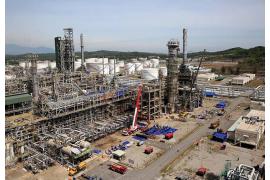
Lightning is one of the most destructive phenomena of nature. It causing maximum damage to living beings and to the equipment across the globe. Due to the storage of explosive and hazardous materials in the Oil & Gas Industry, a direct lightning strike or secondary surges could lead to major disaster leading to loss of lives, resources and equipment since the average temperature of it can be around 20,000 degree Celsius.
- The Flammable tanks should be bonded and earthed properly in order to avoid losses.
- The ESE should be installed higher than the flammable area to be protected.
- The down conductor should be taken outside the safety area to avoid electric arc.
High Rise Building:
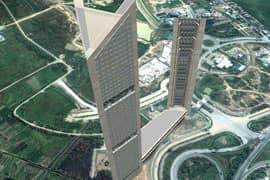
Taller buildings in general attract lightning strikes, hence an efficiently designed LPS is highly critical to safeguarding these structures from the destruction caused due to lightning. Also, such structures should make sure quality earthing systems and surge protection devices are installed to protect the lives and expensive electronic equipment housed in these structures. National Building Code guidelines to be followed while designing LPS for such tall buildings.
Since the building height exceeds 60m the 20% of the top should be protected by the lateral protection system.
Minimum of 4 numbers down conductors must be used and it shall be interconnected by a ring conductor when applicable.
Two earth pits should be provided per down conductor.
Religious Buildings:
India has got numerous numbers of historical monuments and heritage sites across the length and breadth of the country. Protecting them will result in preserving the rich cultural heritage of our country and the sheer architectural marvel of our ancestors. Every structure is unique in its style, it is necessary to protect that from lightning strikes.
- The ESE should be installed to protect any monuments structure like steeples, towers and belfries.
- Through the main tower from the air terminal the down conductor can be laid directly.
- If the main tower height exceeds 40mtrs it is recommended to provide second specific down conductors through nave ridge.
- A separate lightning air terminal should be given for the non-metallic cross or statue
- Interconnection should be made between ESE system's earthing and electric earthing by an earthing conductor.
The ESE type air terminals and installation are recognized by various countries among the world and many countries have published their own standards for the ESE air terminal. Some of the most complete lightning protection standards which are related to ESE air terminals are listed as follows:
- UNE 21186:2011: «Protección contra el rayo: Pararrayos con dispositivo de cebado» (España).
- NF C 17-102:2011: «Protection contre la foudre - Systèmes de protection contre la foudre à dispositif d'amorçage» (France).
- NP 4426:2013: «Proteção contra descargas atmosféricas - Sistemas com dispositivo de ionização não radioativo» (Portugal).
- NA 33:2014: «Proteção contra descargas atmosféricas» (Angola).
- NC 1185:2017: «Praección contra rayos - Seguridad integral frente al rayo» (Cuba).
- IRAM 2426:2015: «Pararrayos con dispositivo de cebado para la protección de estructuras y de edificios» (Argentina).






























































Follow Us